


Author:Joe Dunthorne

Wild Abandonis Joe Dunthorne's outrageously funny novel of life in a Welsh commune.
Kate and Albert, sister and brother, are not yet the last two human beings on earth, but Albert has high hopes. The secluded communal farm they grew up on is - after twenty years - disintegrating, along with their parents' marriage. They both try to escape: Kate, at seventeen, to suburbia and Albert, at eleven, into preparations for the end of the world.
However, Don, the group's leader and their father, is convinced he can save everything, if only he can bring his followers into the modern age. How? By force of personality, strict self-sufficiency and a rave with a 10k soundsystem. Understandably, Albert and Kate have other ideas . . .
'Populated by flawed, occasionally exasperating, lovable and, above all, thoroughly imagined characters, Wild Abandon is about what happens to children when parents become consumed by their beliefs . . . A terrific novel' Nick Hornby, Guardian, 'Books of the Year'
'A joy. Warm, funny, clever' Sunday Times
'An engaging, emotionally stimulating, chuckle-out-loud read' Time Out
'Occupying a terrain that lies between the very British humour of Jonathan Coe and the zeitgeisty ambition of Douglas Coupland . . . insightful comic writing . . . that manages to be both tender and biting' Independent on Sunday
'A creation of some genius. Dunthorne is a naturally comic writer' Daily Telegraph
'Just as funny and acutely perceptive [as] Submarine' Independent
Joe Dunthorne was born and brought up in Swansea. He is the author of Submarine, which has been translated into fifteen languages and made into an acclaimed film directed by Richard Ayoade, and Wild Abandon, which won the 2012 Encore Award. His debut poetry pamphlet was published by Faber and Faber. He lives in London.
www.joedunthorne.com
A joy. Warm, funny, clever
—— Sunday TimesAn engaging, emotionally stimulating, chuckle-out-loud read
—— Time OutA creation of some genius. Dunthorne is a naturally comic writer
—— Daily TelegraphJust as funny and acutely perceptive [as] Submarine
—— IndependentOccupying a terrain that lies between the very British humour of Jonathan Coe and the zeitgeisty ambition of Douglas Coupland . . . insightful comic writing . . . that manages to be both tender and biting
—— Independent on SundayThe Discworld novels have always been among the most serious of comedies, the most relevant and real of fantasies...Pratchett has been rightly praised for comic invention and whimsy; he does not always get enough credit for the psychological comedy of embarrassment which makes us blush with self-recognition...at once hilariously cynical and idealistically practical.
—— IndependentConfident, meticulous plotting, her strong imagination and her precise, evocative prose. Like The Hamilton Case, The Lost Dog opens up rich vistas with its central idea and introduces the reader to a world beyond its fictional frontiers
—— Sunday TimesThe Lost Dog is a haunted work, it's characters uneasy ... de Kretser's characterisations are beautifully achieved, with even minor figures vividly realised
—— TLSClever, engrossing novel... beautifully shaded
—— MetroThe richness of her prose and the deceptive simplicity of her storytelling make this novel deserving of repeated readings
—— Jo Caird , Sunday Telegraph SevenScattered throughout are brief dramas or anecdotes, involving a variety of odd and often funny characters
—— Lindsay Duguid , The Sunday Timesshe writes humorously and touchingly about the less portentous garish kitsch and personal clutter that they bring with them
—— Isobel Montgomery , GuardianThose childhood ghosts which linger into adulthood are sensitively conjured by Michelle de Kretser... This search for an animal becomes a ravishing search through the fears, hopes and attachments that make us human
—— Anita Sethi , Independent on SundayTold with subtlety
—— Nicola Barr , GuardianSparky... modern... brilliant
—— Claudia Winkleman , BBC Radio 2 Arts Show[A] discomforting and acute tragicomedy ... The bleaker and darker his book becomes, the better it gets, building to a shocking and expertly executed conclusion. Tipped for the top on publication of his first novel, Lee here confirms his talent
—— Daily MailFor all painful events it covers, this is a joyful book. Lee educates us in the beautiful mess of humanity surrounding this tragic event. Joy is one of the best new novels this year.
—— We Love This BookA black comedy of exuberance and bite … original, and brilliantly executed; the characters’ voices … ventriloquised with flair … This is the wittiest, most addictive piece of literary yuppie-bashing since Martin Amis’s Money. Lee is a writer to keep an eye on.
—— IndependentA major new voice in British fiction.
—— GuardianA brilliant book... Jonathan Lee is one of those rare, agile writers who can take your breath away.
—— Catherine O’Flynn, author of What Was Lost[Joy] displays a real flair for narrative and characterisation…Highly accomplished…The closest comparison that can be made is with Joshua Ferris’s Then We Came to the End, which shares a similarly bravura command of narrative voice…Exquisitely and surprisingly written…it proves that Lee is a significant talent and that his future work should be well worth awaiting.
—— ObserverLee’s writing is witty and engaging, containing something of the wearied disgust of Raymond Chandler’s prose…These four voices confiding in the counsellor are entertainingly distinct…The novel’s outstanding achievement, however, is the central, spiralling narrative that Jonathan Lee threads among these personal accounts: the intimate story of how Joy came to fall, a forensic portrayal of despair that shows Lee to be an exceptional, brave prose stylist. The dark revelations in the book’s final pages are disturbing while not gratuitous, but Lee also allows some credible room for optimism among these cluttered lives. Funny and humane, Joy is an enormously impressive piece of storytelling
—— Tom Williams , Literary ReviewLee's the real deal - a British writer on the cusp of greatness. This novel follows the aftermath of lawyer Joy Stephen's apparent suicide. The corporate and personal explode in a brilliant powerful dissection of modern Britain.
—— Henry Sutton, The MirrorJonathan Lee’s second novel, Joy charts the final day in the life of a high-flying young lawyer. Lee writes with extraordinary vividness, with prose so sharply defined it takes your breath away.
—— ObserverWith its supple prose, ingenious structure, wit and slow-burn sympathy, Joy is a sly miracle of a novel.
—— A.D. Miller[One] of Britain’s most exciting writers… I loved how Jonathan Lee’s Joy gradually unravels through different characters…The ending of Joy is brilliantly shocking. I finished it three weeks ago and it’s still playing on my mind… Something about Joy’s slow and brooding story really affected me…Lee manages to make every voice distinct…It is Joy’s complexity which keeps you reading…[A] wonderful book.
—— StylistLee constructs office scenes easily, weaving together numerous characters and dialogues with flair…the writing crackles.
—— Independent on Sunday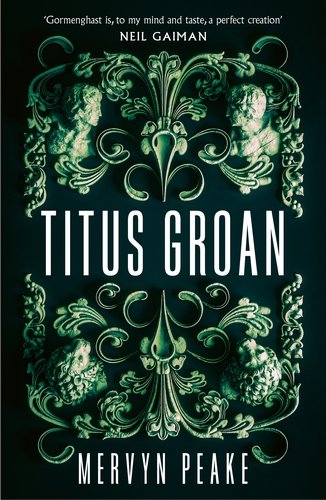
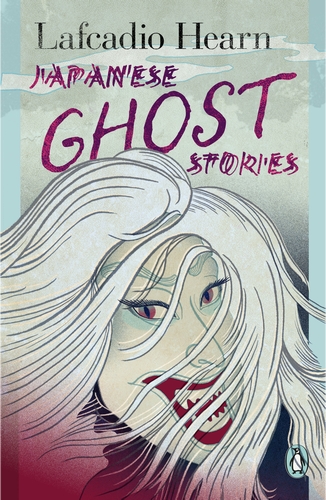
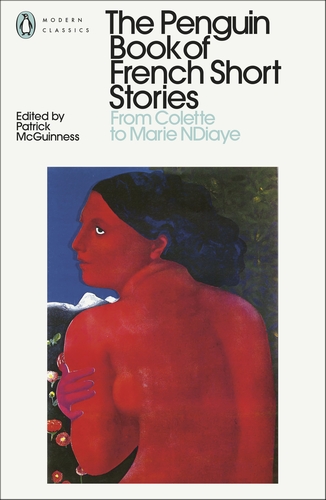
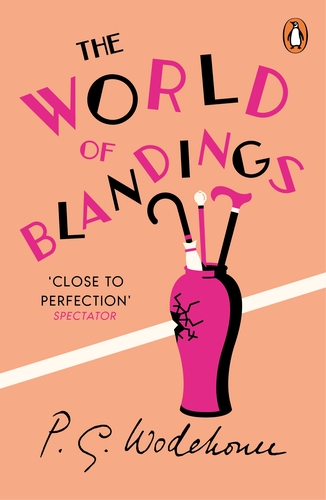
 zpostcode
 Recruit
 weather
 mreligion
 Yellowpages
 sport
sport constellation
 shopping
 name
name game
game directory
 literature
 Word
Word tour
tour furnish
 Lottery
 tftnews
 lyrics
 News
News digital
 car
car dir
dir Edu
Edu Finance